

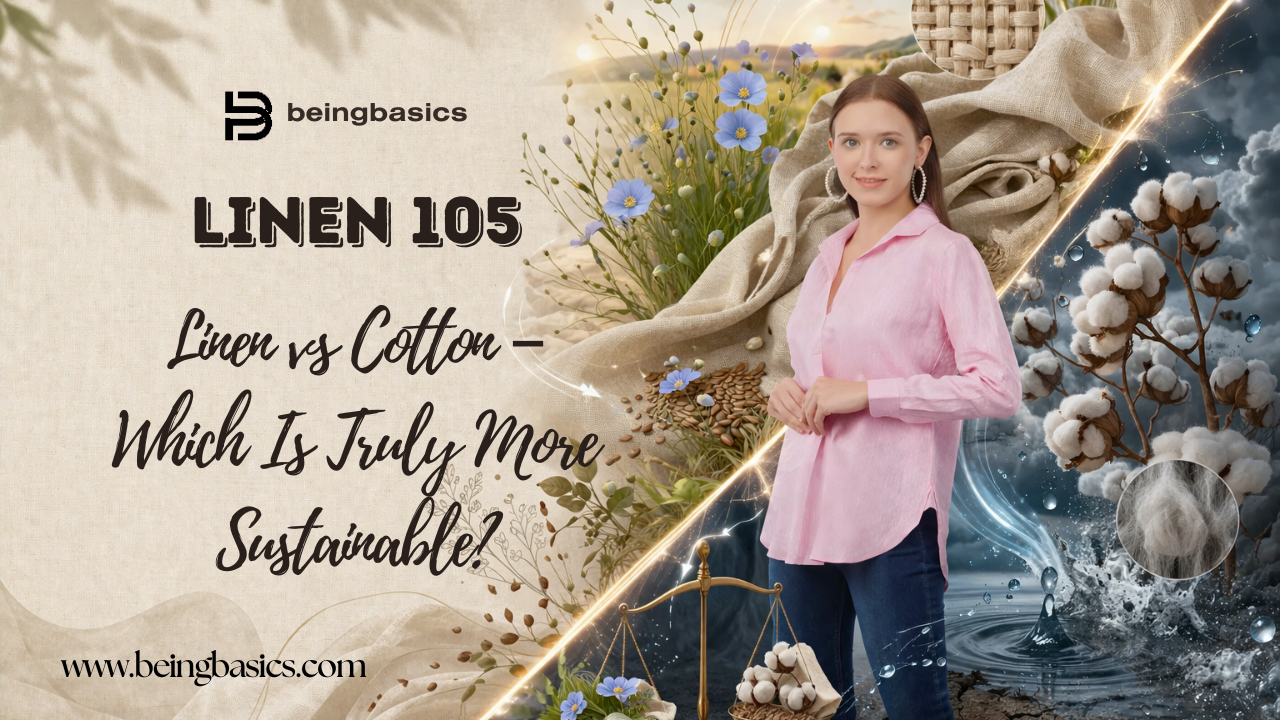
Choosing between linen and cotton can feel simple at first. Both come from plants. Both are loved for comfort. Both show up again and again in modern wardrobes. Yet the real story goes much deeper. Anyone exploring linen vs cotton sustainability quickly learns that natural does not always mean equal.
This guide breaks down the real difference between linen and cotton through a practical sustainability lens. You will see how flax and cotton behave at the farm level, how they affect ecosystems, and how garment lifespan changes the bigger picture. Whether you are shopping for eco-friendly linen clothing, comparing breathable linen outfits, or simply asking which fabric belongs in a slower wardrobe, this article is here to help you choose with more clarity.
Why Linen vs Cotton Sustainability matters
Fabric choices shape more than style. They shape land use, water stress, waste, and the lifespan of what we wear. That is why linen vs cotton sustainability has become a key conversation for people who care about conscious fashion. Linen and cotton may sit side by side in stores, but their environmental stories are very different.
Cotton has long been treated as the default natural fabric. It feels familiar, soft, and easy to wear. Linen, on the other hand, often feels more intentional. It is tied to slow fashion, lower-impact dressing, and timeless summer wardrobes. Yet no fabric should get a free pass based on image alone. A true sustainable fabric comparison needs to look at the full journey from crop to closet.

Raw material origins
Every fabric starts with a plant, and that starting point tells you a lot about its environmental impact. A raw material is not just a source of fibre. It also reflects farming needs, land pressure, and how much of the crop can actually be used. That is why flax vs cotton farming is such an important part of the linen vs cotton sustainability conversation.
Linen comes from the flax plant
Linen is made from flax, a crop that grows for its stem fibre. That matters because the useful textile part is built into the plant structure itself. After harvest, the fibres are separated from the stem and turned into yarn and fabric. Flax also offers more than textile use alone. Seeds can be used for oil and other applications, which makes the plant more resource-efficient overall.
A few points make flax stand out
- the textile fibre comes from the stem rather than a fluffy seed covering
- more of the plant can be put to use beyond clothing
Cotton comes from the cotton boll
Cotton comes from the soft fibres that grow around the seeds of the cotton plant. Those fibres are then separated, cleaned, spun, and woven into fabric. It sounds simple, yet cotton farming usually demands more intervention from the start. The crop often grows in regions where irrigation and chemical inputs are more common, which can raise its environmental burden.
Why crop type changes the impact
Flax and cotton are not just different plants. They behave differently within farming systems. Flax tends to work well in cooler climates and can often grow with fewer external inputs. Cotton is usually grown at a larger scale and is more commonly linked to thirsty agricultural models.
Water consumption
Water is one of the clearest differences between these two fabrics. A fabric may feel light and breathable on the body, yet its production may place heavy pressure on freshwater systems. That is why water use sits at the heart of linen vs cotton sustainability and why many conscious shoppers move toward linen.
Cotton’s water footprint is heavy
Cotton farming has a strong reputation for water intensity. Many cotton-growing regions depend on irrigation, which can strain rivers, groundwater, and local farming systems. Water stress becomes even more serious when cotton is grown where rainfall is limited.
That issue matters beyond farming alone. A water-hungry crop carries social and environmental consequences for surrounding communities and habitats. Anyone searching for which fabric is more sustainable should see water use as a major part of the answer. Cotton often asks more from the planet before it even becomes cloth.
Flax often grows with rainfall
Flax has a major advantage here. Much of the flax used for linen is grown in regions where rainfall supports the crop naturally. That reduces the need for heavy irrigation and makes linen a more climate-aware option for many supply chains.
This is one reason linen appeals to shoppers looking for premium quality linen clothing that aligns with sustainable values. A garment can feel elevated and still be more responsible at the farm level.
A few practical takeaways stand out
- rain-fed flax often places less pressure on freshwater sources
- lower irrigation needs strengthen linen’s sustainability profile
Why water use matters to your wardrobe
A lower water footprint does not just look good on paper. It reflects a fabric that may be better suited to future-facing fashion systems. Water scarcity is already reshaping agriculture worldwide, so materials with lower demands will matter more and more.
For consumers building wardrobes around breathable linen outfits, linen pants Norway, or easy warm-weather pieces, water use offers a strong reason to choose linen over conventional cotton.
Carbon footprint and energy use
Carbon impact gives a wider view of how a fabric performs across its life cycle. Farming, processing, and transport all play a role. While outcomes vary by region and supply chain, linen usually benefits from needing fewer resource-heavy inputs at the cultivation stage.
Cotton often begins with a heavier footprint because irrigation, fertilisers, and chemical use all add energy demand. Processing can also be intensive depending on where the fibre is grown and turned into fabric. Linen is not impact-free, yet its agricultural phase is often lighter, which can lower its overall climate burden.
Transport can shift the picture too. European flax supply chains may reduce travel distances for some brands, especially those serving customers interested in linen online shopping Norway and more local-minded sourcing. A shirt or pair of trousers made from responsibly sourced linen can therefore align with both style and lower-impact thinking.
Durability and garment lifespan
A sustainable fabric should last. That sounds obvious, yet lifespan is often overlooked. People focus on the farming stage and forget what happens after purchase. A garment worn for years spreads its impact over a longer life. A garment replaced quickly creates more demand, more waste, and more repeat production.
Linen is widely valued for strength and long-term wear. It softens beautifully over time while still holding its character. That makes linen especially relevant to slow fashion and intentional wardrobes. Cotton can be comfortable and versatile, yet many cotton basics are treated as easy replacements rather than long-term staples.
This is where linen becomes more than a trend. It becomes a practical investment. Shoppers searching for affordable linen clothing Norway often want that balance between value and longevity. The same is true for anyone exploring Norwegian linen clothing or elevated summer essentials that go beyond one season.

Conclusion
When you step back and compare the whole picture, linen usually comes out ahead. Water use is generally lower. Chemical dependence is often lighter. Resource efficiency is stronger. Garment lifespan tends to be longer. That makes linen vs cotton sustainability more than a trend phrase. It becomes a clear guide for better wardrobe choices.
BeingBasics believes conscious fashion should feel clear, wearable, and honest. If you are exploring premium quality linen clothing, timeless breathable linen outfits, or easy pieces that fit the spirit of Nordic linen fashion, BeingBasics is a thoughtful place to begin.
Refresh your wardrobe with BeingBasics and find linen styles that bring together ease, durability, and sustainability.
Recommended Products


Select options
This product has multiple variants. The options may be chosen on the product page

Select options
This product has multiple variants. The options may be chosen on the product page
Select options
This product has multiple variants. The options may be chosen on the product page
Select options
This product has multiple variants. The options may be chosen on the product page
Select options
This product has multiple variants. The options may be chosen on the product page
Select options
This product has multiple variants. The options may be chosen on the product page