

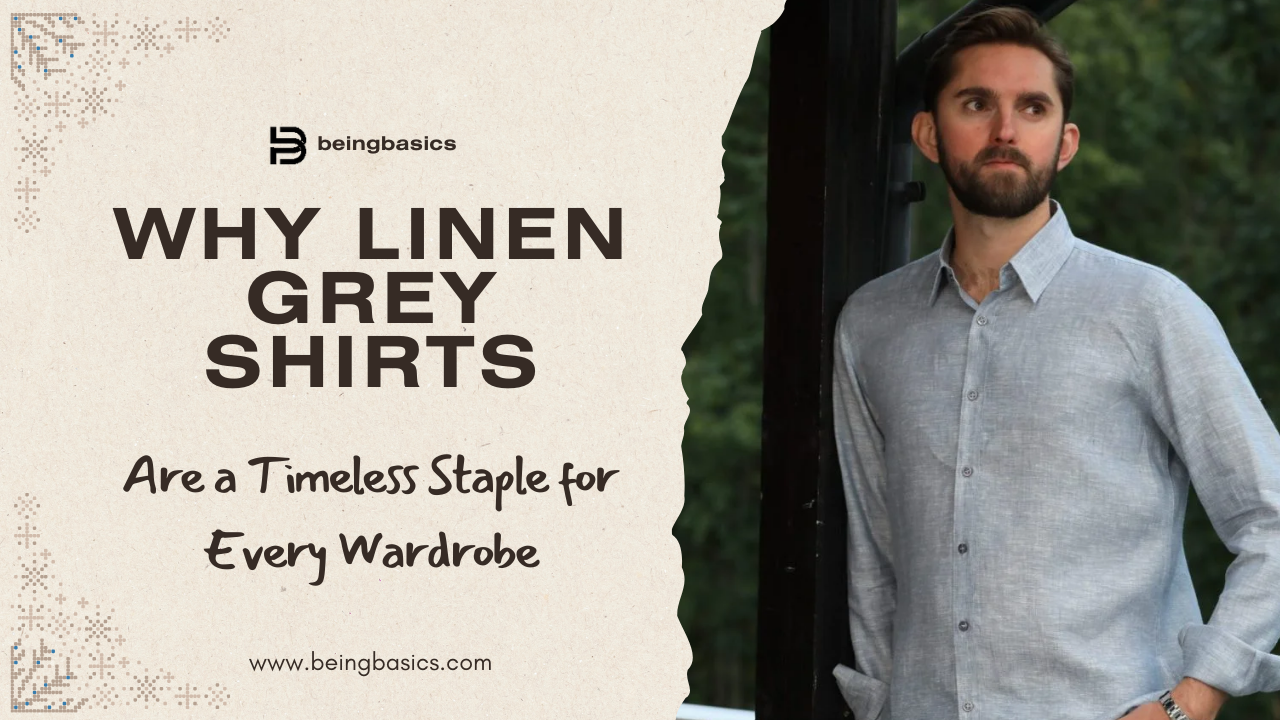
Every wardrobe eventually reaches a crossroads. Shoppers stop buying what looks good for one season and start choosing what works year after year. Questions become more practical. Will this shirt stay comfortable all day? Does the fabric justify the cost? Can it adapt to different settings without constant replacement?
Linen Grey Shirts answer those questions quietly and confidently. Buyers appreciate how effortlessly they fit into daily life. Sellers value how easily they communicate long-term value. This shared understanding explains why Linen Grey Shirts beingbasics is less about trends and more about smart wardrobe design.
Why Grey Linen Always Feels Like a Safe Choice
Grey rarely demands attention, yet it never disappears. That balance makes it ideal for everyday dressing. Linen adds depth to grey through texture and movement, preventing the color from feeling flat or dull.
Buyers often worry whether grey limits outfit options. Real-world use proves the opposite. Grey linen pairs smoothly with denim, tailored trousers, or linen pants from Norway collections, creating outfits that feel intentional without overthinking.
Norwegian linen style leans heavily on subtlety and function. Neutral shades, breathable fabrics, and layered versatility define the aesthetic. Grey linen naturally fits this mindset, supporting minimalist dressing without sacrificing personality.
Linen Production Is Where Real Value Is Created
Every meaningful conversation about linen starts with production. Flax cultivation determines fiber length, strength, and uniformity. Longer fibers result in stronger yarns, smoother finishes, and better wear performance.
European flax remains a preferred source due to controlled growing conditions and stricter quality standards. Mechanical retting methods preserve fiber integrity better than harsh chemical shortcuts. Buyers feel this difference through shirts that soften with wear rather than breaking down.
Weaving density plays a critical role. Shirts that feel extremely lightweight may lack durability, while overly heavy linen restricts airflow. Balanced GSM linen supports breathability while maintaining structure.
Grey dyeing introduces additional technical challenges. Uneven pigment absorption weakens fibers and causes premature fading. Proper finishing ensures color stability, directly addressing buyer concerns around longevity.
Eco-friendly linen clothing earns credibility when production details support durability rather than marketing claims. Sustainability becomes tangible when garments last longer.
Comfort That Aligns With Real Life
Comfort rarely means the same thing to every buyer. Linen delivers comfort through performance rather than padding or artificial softness. Flax fibers regulate temperature naturally, allowing heat to escape while absorbing moisture efficiently.
Linen shirts men’s Norway continue gaining popularity because they perform well across indoor heating and outdoor climate shifts. Layering feels natural rather than stifling. Movement remains unrestricted throughout the day.
Skin sensitivity concerns arise frequently, especially among buyers seeking natural fabrics. Linen remains hypoallergenic and resists odor retention due to quick moisture evaporation. This benefit matters during long wear hours and warmer months.
Shrinkage anxiety often delays purchasing decisions. Properly pre-washed and finished linen holds its shape far better than untreated alternatives. Clear communication around care builds confidence at checkout.
Why Grey Linen Improves With Wear
Wrinkling remains one of the most discussed topics around linen. Linen wrinkles because fibers flex, not because they weaken. Those creases soften visually over time, creating character rather than disorder.
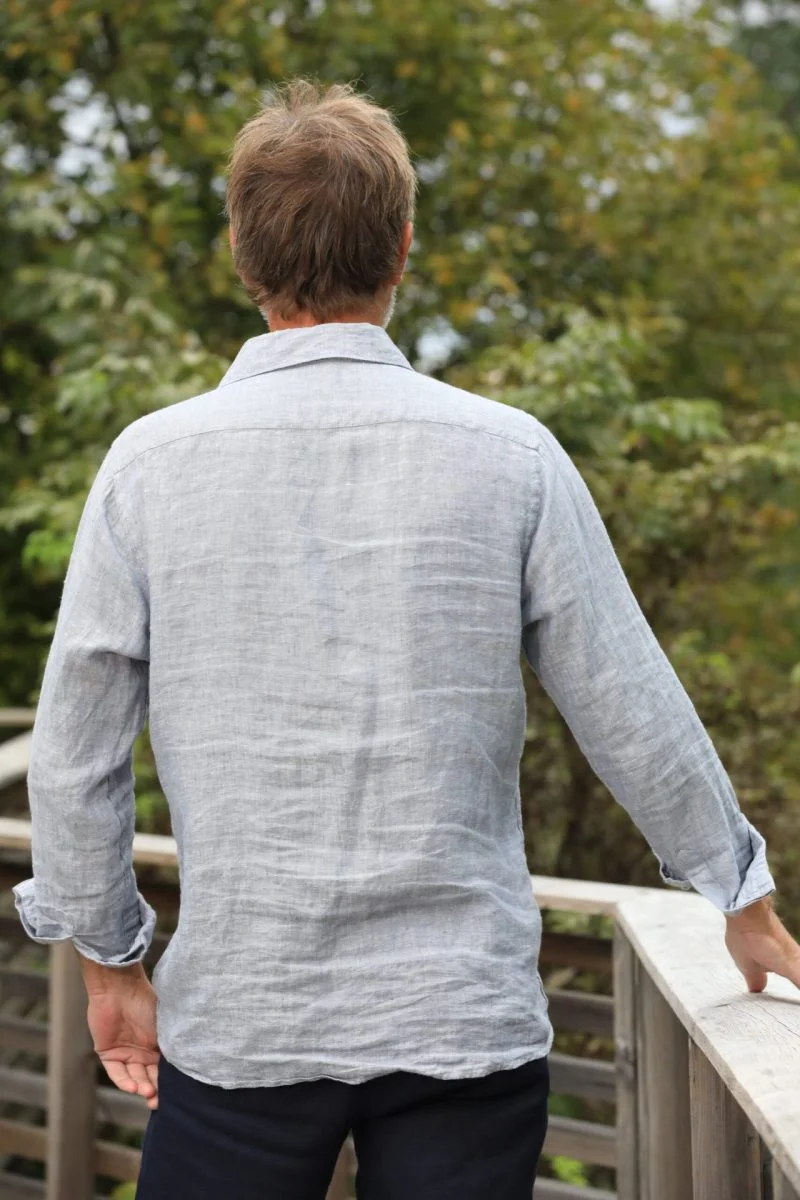
Grey handles this behavior better than lighter shades. Wrinkles blend into the color tone instead of standing out sharply. Buyers appreciate how the shirt continues looking intentional even after extended wear.
Cotton alternatives often thin out or pill with repeated washing. Linen behaves differently. Fibers relax and soften without losing integrity, meaning the garment improves rather than deteriorates.
Minimalist linen wardrobe planning depends on this aging process. Pieces must evolve positively, not require constant replacement.
Addressing the Questions Buyers Actually Ask
“Does linen justify the price?”
Linen production costs remain higher due to slower growth cycles and careful processing. Value becomes clear when the cost per wear drops over years rather than months.
“Will one shirt really work for multiple occasions?”
Grey linen transitions easily between relaxed and refined settings. Styling determines formality, not the fabric.
“Is linen difficult to maintain?”
Linen prefers gentle washing, air drying, and light steaming. Buyers who follow these basics gain longevity rather than inconvenience.
Direct answers reduce hesitation and strengthen trust.
How Linen Grey Shirts Fit Scandinavian Dressing Habits
Scandinavian wardrobes prioritize function, restraint, and durability. Linen pants Norway collections pair naturally with grey linen shirts, creating cohesive outfits with minimal effort.
Norwegian linen style values texture over loud design and longevity over novelty. Grey linen reflects these principles by emphasizing fabric quality rather than visual noise.
Eco-friendly linen clothing resonates strongly in regions where sustainability forms part of everyday decision-making. Long-lasting garments align naturally with responsible consumption.

What Buyers Should Look For Before Purchasing
Choosing a Linen Grey Shirts should feel intuitive once buyers know what to observe. Quality linen communicates its value through behavior, construction, and long-term performance rather than labels or technical figures.
Fabric Feel and Structure—Reading Linen Without Numbers
Well-made linen feels balanced in hand. Fabric that collapses too easily often lacks structural integrity, while overly rigid linen restricts airflow and movement. The ideal linen grey shirt holds its shape when lifted, yet relaxes naturally when worn.
Airflow should feel immediate rather than forced. Breathability becomes noticeable as the fabric lifts slightly away from the skin instead of clinging. This behavior indicates thoughtful weaving that supports linen’s natural cooling properties.
Surface texture also offers clues. Linen with controlled irregularity reflects quality flax fibers, while excessive fuzziness or uneven patches often signal weaker yarns that degrade faster with use.
Fiber Origin—Why Where Linen Comes From Matters
Fiber origin influences how linen ages. Longer, well-formed flax fibers spin into smoother yarns that resist abrasion and soften evenly over time. Shorter or inconsistent fibers tend to fray, pill, or lose structure prematurely.
High-quality linen improves with wear rather than deteriorating. Softening should feel gradual and uniform, not thin or worn out. Buyers seeking eco-friendly linen clothing benefit from understanding that better fibers require fewer chemical treatments, preserving both comfort and environmental integrity.
Fabric labels that acknowledge sourcing provide reassurance, but the true indicator appears through how the linen behaves during everyday wear.
Construction Quality—Where Linen Shows Its Strength
Linen naturally moves with the body, which places stress on seams and joins. Strong construction distributes that stress evenly instead of allowing it to concentrate in weak areas.
Stitching should appear consistent and intentional. Uneven stitches or loose thread ends often indicate rushed production. Reinforced seams at shoulders, collars, and side joins prevent distortion as the fabric relaxes over time.
Construction flaws usually appear early. Quality linen grey shirts maintain seam integrity even after repeated washing and movement.
Fit Choice—Comfort Is a Functional Decision
Fit influences how linen performs throughout the day. Relaxed silhouettes allow air to circulate freely, enhancing linen’s cooling effect and natural drape. This fit suits casual wear, warmer environments, and layered outfits aligned with Norwegian linen style.
Tailored silhouettes offer a cleaner appearance while still respecting linen’s need to move. Well-designed tailored linen accounts for natural fiber flexibility, avoiding tightness or restriction. Overly slim cuts often strain seams and reduce airflow, undermining comfort.
Buyers benefit most when fit selection aligns with lifestyle rather than trend-driven expectations.
Care Guidance—What Instructions Reveal About Quality
Care instructions reflect confidence in the fabric. Linen that demands extreme handling often lacks proper finishing. Quality linen tolerates gentle, realistic care routines without losing shape or character.
Air drying supports fiber relaxation, while light steaming restores form naturally. Linen responds better to patience than force. Excessive heat or aggressive pressing damages fibers rather than improving appearance.
Care guidance should feel achievable in daily life, not like a warning label.
Why Understanding These Details Matters
Well-informed buyers experience greater satisfaction because expectations match reality. Linen grey shirts reward those who understand fabric behavior, construction quality, and fit logic.
Rather than chasing perfection, buyers who recognize quality linen appreciate its evolution over time. That understanding transforms linen from a seasonal experiment into a long-term wardrobe staple.
Conclusion—Why Linen Grey Shirts Never Lose Relevance
Linen Grey Shirts beingbasics remain relevant because they solve real wardrobe problems. Production quality supports durability. Durability supports comfort. Comfort supports repeat wear.
Buyers gain garments that simplify decisions and reduce clutter. Sellers gain loyal customers who return for reliability rather than novelty.
Minimalist dressing depends on pieces that earn their place repeatedly. Linen grey shirts continue doing exactly that.
Timelessness comes from engineering, not trends. Linen proves its value every time it is worn.
FAQs
Why are Linen Grey Shirts considered wardrobe basics?
Linen Grey Shirts beingbasics come from their ability to adapt across seasons, outfits, and occasions while maintaining comfort and durability. Grey works as a neutral anchor, while linen delivers long-term performance.
Are Linen Grey Shirts suitable for Scandinavian climates?
Linen shirts men’s Norway perform well due to linen’s natural temperature regulation. Layering remains comfortable indoors and outdoors, making it ideal for fluctuating climates.
How does linen compare to cotton for everyday wear?
Linen offers better breathability, moisture management, and longevity than most cotton fabrics. Fibers soften over time without thinning, making linen a stronger long-term investment.
Do Linen Grey Shirts wrinkle too easily?
Wrinkling reflects fiber flexibility rather than fabric weakness. Grey linen disguises creases naturally, creating texture rather than an unkempt appearance.
Is linen clothing truly eco-friendly?
Eco-friendly linen clothing uses fewer resources during cultivation and lasts longer, reducing overall consumption. Durability plays a major role in sustainability.
What should buyers check before purchasing a linen grey shirt?
Buyers should review fabric weight, fiber origin, stitching quality, and finishing processes. Proper care instructions also indicate thoughtful production.
Can Linen Grey Shirts be part of a minimalist wardrobe?
A minimalist linen wardrobe benefits greatly from grey linen due to its versatility, neutral styling, and long wear cycles.
Recommended Products
Select options
This product has multiple variants. The options may be chosen on the product page
Select options
This product has multiple variants. The options may be chosen on the product page
Select options
This product has multiple variants. The options may be chosen on the product page

Select options
This product has multiple variants. The options may be chosen on the product page

Select options
This product has multiple variants. The options may be chosen on the product page
Select options
This product has multiple variants. The options may be chosen on the product page