


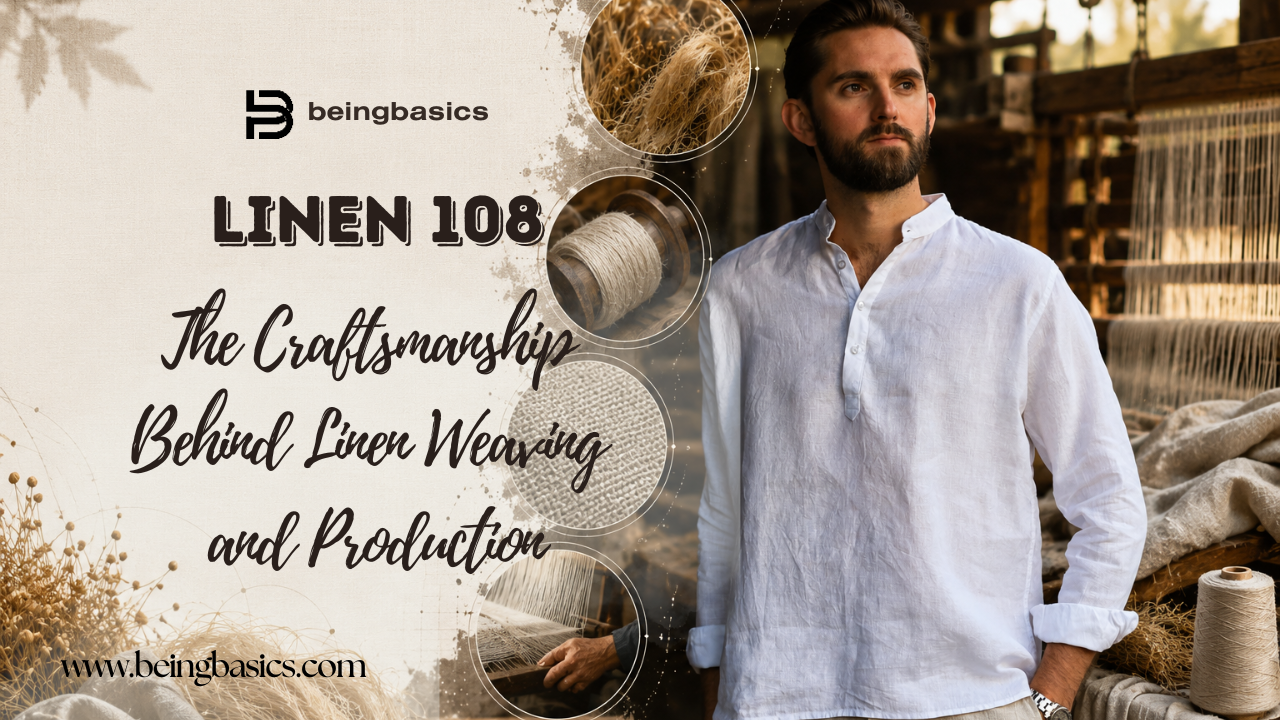
Your linen shirt may look effortless, but the journey behind it is full of skill. Before linen becomes something you wear on warm days, slow weekends, or city walks, flax goes through careful processing, spinning, weaving, and finishing.
Great linen fabric is not just made by machines. It is shaped by human judgement, timing, touch, and technical knowledge. That is why high quality linen shirts feel different from rushed alternatives. They breathe better, soften beautifully, and hold their character over time.
For anyone building a minimalist linen wardrobe or searching for sustainable linen clothing Norway, understanding the craft behind linen weaving and production helps you shop with more confidence.

Why Linen Craftsmanship Still Matters Today
Linen is one of the most skill-demanding natural textiles because flax fibres behave differently from cotton. They are strong, but they are also less elastic. That means they do not stretch easily during spinning or weaving. Every stage needs care, from fibre separation to loom tension.
Why Linen Is Harder to Make
Linen production combines nature, craft, and technical control. Flax must be retted, cleaned, aligned, spun, woven, washed, softened, dyed, and inspected before it becomes wearable.
Small mistakes can affect the final garment. Poor retting can make fibres rough. Uneven spinning can create weak yarn. Incorrect loom tension can cause thread breakage. Harsh finishing can damage the natural feel of linen fabric.
Good craftsmanship gives linen its best qualities.
- Breathability
- Strength
- Natural texture
Why It Matters to Your Wardrobe
Craftsmanship affects how linen feels, moves, and lasts. A well-woven shirt can feel crisp yet relaxed. A good pair of lightweight linen trousers can feel breathable without losing structure. Quality linen tops women’s collections often depend on careful spinning and finishing, not just design.
For customers looking for premium linen clothing or the best linen clothing in Norway, the craft is the hidden difference. Two garments may look similar online, but the one made with better fibre handling and weaving will usually feel better for longer.
That is why linen fabric rewards slower, more thoughtful production.
From Flax Fibre to Yarn
Before linen reaches the loom, flax must be transformed into clean, spinnable fibre. This early stage decides much of the final softness, strength, and comfort. The process looks simple from the outside, but skilled workers know that timing and handling make all the difference.
Retting and Fibre Separation
Retting is where nature starts the craft. Flax stems are exposed to moisture so natural microbial activity can loosen the fibres from the woody stem. The timing has to be right. Too little retting makes fibres hard to separate. Too much can weaken them.
This step is essential for high quality linen fabric. Clean fibre separation creates smoother yarn, which leads to better woven cloth. Skilled workers judge the condition of the flax carefully, using experience rather than guesswork.
Scutching and Hackling
After retting, flax still contains woody fragments. Scutching removes those pieces, while hackling combs the fibres into long, aligned strands. This stage prepares the material for spinning.
Fibre alignment matters because uneven fibres create uneven yarn. That can lead to rough texture, weak areas, or inconsistent fabric. Smooth preparation helps create the kind of linen fabric used in refined shirts, trousers, shorts, and everyday wardrobe staples.
This is where traditional craft and mechanical tools often work together. Machines may help remove and comb fibres, but skilled oversight protects quality. Better preparation means better comfort, better drape, and better longevity.
The Art of Linen Spinning
Spinning turns prepared flax into yarn. This stage needs steady tension, fibre control, and patience. Since flax fibres do not stretch much, they can break if handled carelessly. Good spinning creates yarn that is strong enough for weaving and smooth enough for comfortable clothing.
Wet Spinning and Dry Spinning
Wet spinning uses moisture to soften flax fibres during spinning. It often creates smoother, finer yarns used for softer and more polished linen clothing. Dry spinning creates a more textured yarn with a natural, rustic feel.
Both methods can produce beautiful results. The right choice depends on the desired garment. A polished white linen shirt in Norway may benefit from smoother yarn, while relaxed Norwegian linen style shorts may suit a more textured finish.
Spinning choices affect how breathable linen outfits feel on the body. They also influence the final look, from clean and refined to natural and casual.
Yarn Consistency and Strength
Consistent yarn is the base of reliable linen fabric. When yarn is uneven, the weave may look irregular or feel rough. Skilled spinners control twist, fibre alignment, and tension so the yarn can handle the stress of weaving.
This matters for pieces that are worn often, like linen shirts for summer Norway, linen pants Norway, and everyday linen tops. Strong yarn helps clothing keep its shape and comfort through repeated wear.
Affordable linen clothing Norway can still be well made, but extremely cheap linen often cuts corners. Spinning is one of the places where shortcuts show up later as roughness, weakness, or poor drape.
The Weaving Process
Weaving is where yarn becomes cloth. Threads are arranged on a loom and interlaced to create structure, surface, and movement. The loom provides the motion, but skilled setup and monitoring decide the final quality of linen fabric.
Warp and Weft
Woven linen is built from warp and weft threads. Warp threads run lengthwise, while weft threads move across them. Together, they create the structure of the fabric.
The weave affects breathability, strength, texture, and drape. A closer weave can feel more structured. A looser weave can feel lighter and airier. This is why linen can work for shirts, trousers, dresses, and summer layers.
Loom Skill and Tension Control
Linen is harder to weave than many fabrics because flax yarn has low elasticity. The loom tension must be carefully managed. Too much tension can snap the yarn. Too little can create uneven fabric.
Skilled loom operators monitor the weaving process and make adjustments when needed. Their work protects the surface, structure, and comfort of the finished cloth.
Good weaving gives linen fabric its quiet confidence.
Finishing Techniques That Define Quality
Once woven, linen still needs finishing before it becomes wearable. Finishing shapes softness, color, shrink behaviour, and final hand feel. This stage can make linen feel relaxed and comfortable while protecting its natural strength.
Dyeing and Color Finish
Dyeing linen takes skill because flax absorbs color differently from many other fibres. A clean linen grey shirt in Norway or a classic white shirt may look simple, but the finish requires control.
Color should feel even without hiding the natural texture. Strong finishing protects both tone and fibre character.
Shoppers searching for linen tops online Norway, shop linen clothing Norway, or best online linen store Norway often look for versatile colors that fit daily wardrobes. Natural shades, soft neutrals, and timeless tones work especially well because linen already has visual depth.
How Craftsmanship Impacts What You Wear
Craftsmanship becomes obvious when you live in linen. Good linen feels breathable, relaxed, and strong. It moves with you without losing its natural shape. Poorly made linen can feel rough, overly thin, or weak after limited wear.
The fibre preparation affects softness. The spinning affects strength. The weaving affects drape. The finishing affects comfort. Every step connects to the final garment.
This is why high quality linen shirts, linen trousers, and summer layers can feel so easy. They are not just designed well. They are made well.
The same idea applies to searches like best quality linen shirts, best linen fabric for clothing, and sustainable linen clothing Norway. People want pieces that feel good, look calm, and hold value.

Conclusion
Linen may look simple, but the craft behind it is detailed and demanding. Flax must be separated, cleaned, spun, woven, finished, and checked before it becomes clothing. Each stage shapes how the final piece feels, breathes, fits, and lasts.
When you understand the work behind linen fabric, you can shop with more confidence. You can look past quick trends and choose clothing built on care, skill, and natural comfort.
Build a cleaner, calmer wardrobe with BeingBasics linen pieces made for comfort, breathability, and lasting style.
Recommended Products


Select options
This product has multiple variants. The options may be chosen on the product page


Select options
This product has multiple variants. The options may be chosen on the product page
Select options
This product has multiple variants. The options may be chosen on the product page

Select options
This product has multiple variants. The options may be chosen on the product page

Select options
This product has multiple variants. The options may be chosen on the product page
Select options
This product has multiple variants. The options may be chosen on the product page