

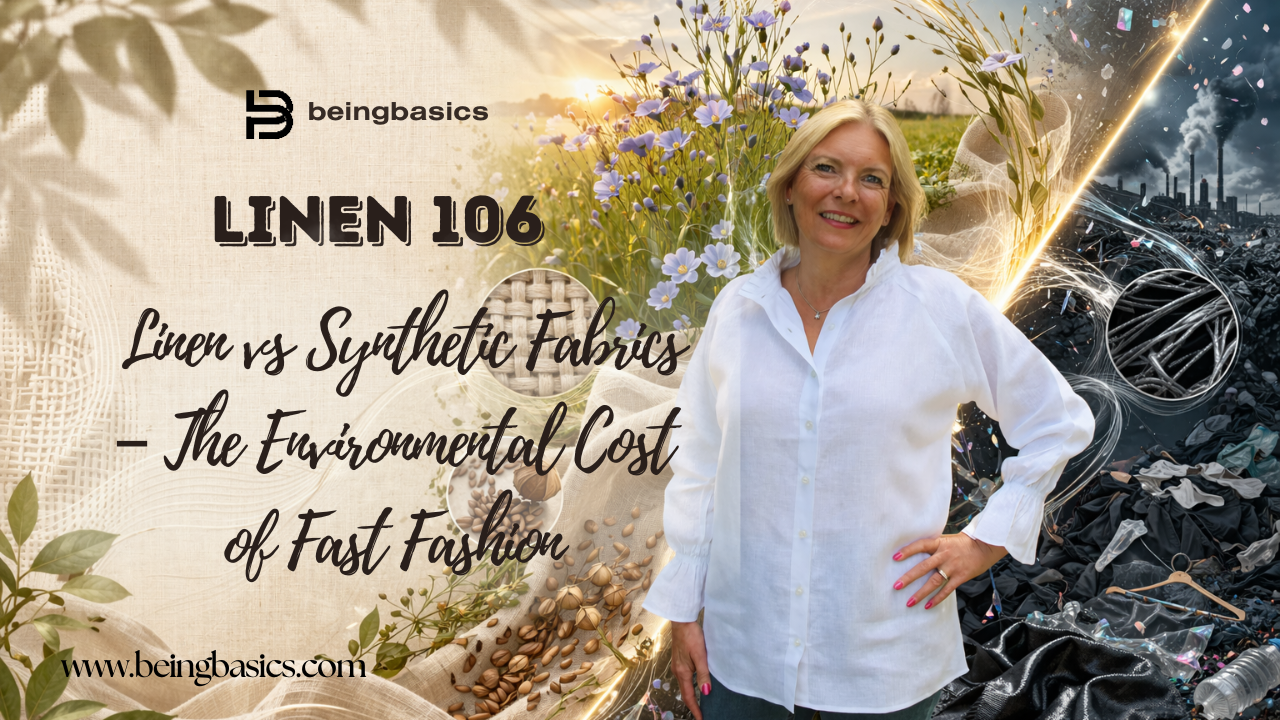
Fast fashion looks easy, cheap, and harmless at first glance. A cute top here, a trendy dress there, and suddenly your wardrobe is packed with pieces that lose shape, feel worn out, and get tossed aside way too fast. That cycle may feel normal, but the materials behind it tell a much bigger story.
This is where linen vs synthetic fabrics becomes a conversation worth having. Most fast fashion relies on oil-based materials like polyester, nylon, and acrylic. These fabrics are made for speed, low cost, and high volume. Linen comes from flax, a natural plant fibre that fits a slower, smarter way of dressing. When we compare linen vs synthetic fabrics, we are really comparing two totally different systems of fashion. One pushes overconsumption and pollution. The other supports longevity, comfort, and more conscious choices.
For shoppers looking at eco-friendly linen clothing, breathable linen outfits, and thoughtful wardrobe staples, this topic matters. Let’s unpack what your clothes are really costing the planet and why linen vs synthetic fabrics is more than a fabric debate. It is a lifestyle choice.

What Counts as Synthetic Fabric in Fast Fashion?
Most people hear the word ‘synthetic’ and think only of polyester. Reality is much broader. Fast fashion depends heavily on polyester, nylon, acrylic, and elastane blends because they are cheap to produce, easy to scale, and simple to turn into trend-driven pieces at speed. That is exactly why linen vs synthetic fabrics is such an important conversation for modern shoppers. Fabric labels may look harmless, but the materials behind them are often tied to a much larger environmental problem.
Polyester is the biggest player in this category. You will find it everywhere from dresses and tops to activewear and loungewear. Nylon shows up in stretch pieces and lightweight garments. Acrylic often appears in knitwear that mimics wool. Elastane blends are added to create stretch and body-hugging fits.
Fast fashion brands choose these fabrics because they work well for a fast-moving business model.
- They are low cost and easy to mass produce
- They hold color, resist wrinkles, and fit trend cycles
Linen vs Synthetic Fabrics Starts with Plant vs Petroleum
Every fabric begins somewhere, and that starting point shapes its environmental impact. This is one of the clearest ways to understand linen vs synthetic fabrics. Linen begins in a flax field. Synthetic fabrics begin in fossil fuel extraction. That contrast matters because the source of a material affects emissions, waste, and how dependent fashion becomes on non-renewable resources.
Linen comes from the flax plant, which makes it part of a renewable agricultural system. That plant-based origin is a major reason why linen vs synthetic fabrics often leads sustainability conversations. Linen feels aligned with a slower wardrobe and a lower-impact mindset. Shoppers drawn to premium quality linen clothing, Norwegian linen clothing, and Scandinavian linen clothing are often looking for more than aesthetics. They want clothes that feel connected to nature and conscious living.
Carbon Footprint and Manufacturing Emissions
Fashion does not create impact only when we wear clothes. Damage starts during manufacturing. This is where linen vs synthetic fabrics reveal another major difference. Synthetic textiles require energy-heavy industrial processing, while linen comes from a more natural source system. That does not mean every linen garment is impact-free, but it does mean the production story is very different.
Why Synthetic Fabric Production Creates More Pressure
Polyester, nylon, and acrylic are manufactured through industrial processes that transform fossil-fuel-based feedstocks into fibres. That requires a lot of energy, chemical treatment, and large-scale production infrastructure. The result is a fabric system built for speed rather than balance. This is a huge part of the fast fashion environmental cost that consumers rarely see.
Fast fashion also multiplies that impact by producing huge volumes of clothing designed for short trend windows. Cheap synthetics make it easier to flood stores with more pieces than people actually need. That cycle increases emissions from production, transport, storage, and waste. Linen vs synthetic fabrics matters here because linen supports a more intentional wardrobe model rather than a throwaway one. Shoppers exploring affordable linen clothing Norway or linen online shopping Norway are often moving away from that overproduction mindset.
Why Linen Fits a Lower-Impact Wardrobe
Linen comes from flax, and that plant-based origin helps create a less industrial starting point than synthetic fibre production. A linen garment also tends to stay relevant in your wardrobe for longer because the fabric has a timeless, relaxed appeal. That is where the climate story connects with personal style.
- Fewer replacement purchases can reduce wardrobe turnover
- Timeless pieces work better than trend-based shopping
This is one more reason why linen vs synthetic fabrics is central to conscious shopping. A slower fabric supports slower consumption.
Microplastic Pollution and the Hidden Cost of Synthetic Clothing
This part of the story hits hard because the pollution is tiny, invisible, and everywhere. Synthetic fabrics release plastic microfibres during washing, wearing, drying, and friction. Those fibres move through water systems, air, and ecosystems in ways most shoppers never think about. Linen vs synthetic fabrics becomes especially important here because one sheds plastic, while the other comes from a natural fibre source.
Every Wash Can Release Plastic
A polyester or acrylic garment may feel soft and easy to care for, but each wash can send tiny plastic fibres down the drain. Wastewater systems do not catch everything, which means those particles can end up in rivers, oceans, and soil. That is one of the most serious forms of synthetic fabrics pollution and a key reason why people are increasingly searching for answers about microplastics from clothing.
Why Linen Offers a Cleaner Alternative
Linen is a natural fibre, so it does not release plastic-based microfibres in the same way synthetics do. That difference makes linen an easier fit for people building a lower-impact wardrobe. Shoppers looking for breathable linen outfits, Nordic linen fashion, and eco-friendly linen clothing are often trying to avoid this exact issue. Natural fibres align better with a wardrobe that feels lighter on the planet.
Buyer Questions About Linen and Synthetics
Shoppers often ask whether polyester is really that bad. The honest answer is that the biggest problem is scale. One synthetic garment may not seem dramatic on its own, but billions of cheap, oil-based garments create a system built on emissions, waste, and microplastics from clothing. That is why linen vs synthetic fabrics matters so much.
People also ask why linen is a smarter long-term choice. Linen offers comfort, breathability, durability, and a closer connection to conscious dressing. For those exploring premium quality linen clothing and Norwegian linen clothing, the choice is often about buying less and wearing better.

Conclusion
Clothing choices shape more than personal style. They support entire systems of production, waste, and consumption. Linen vs synthetic fabrics reveals the difference between dressing for a fast fashion cycle and dressing with a longer view. Synthetic fabrics may offer convenience and low prices, but they also come with fossil-fuel dependence, plastic pollution, waste, and a built-in culture of constant replacement.
Linen offers another way forward. It feels natural, breathable, and timeless. It works for people who want wardrobes with more purpose and less clutter. From eco-friendly linen clothing to breathable linen outfits and classic staples inspired by Nordic linen fashion, linen supports a more thoughtful way of getting dressed. BeingBasics stands for clothing that respects both style and the bigger picture
Choose better everyday pieces with BeingBasics and make the switch from fast fashion to timeless linen.
Recommended Products

Select options
This product has multiple variants. The options may be chosen on the product page

Select options
This product has multiple variants. The options may be chosen on the product page

Select options
This product has multiple variants. The options may be chosen on the product page

Select options
This product has multiple variants. The options may be chosen on the product page
Select options
This product has multiple variants. The options may be chosen on the product page


Select options
This product has multiple variants. The options may be chosen on the product page