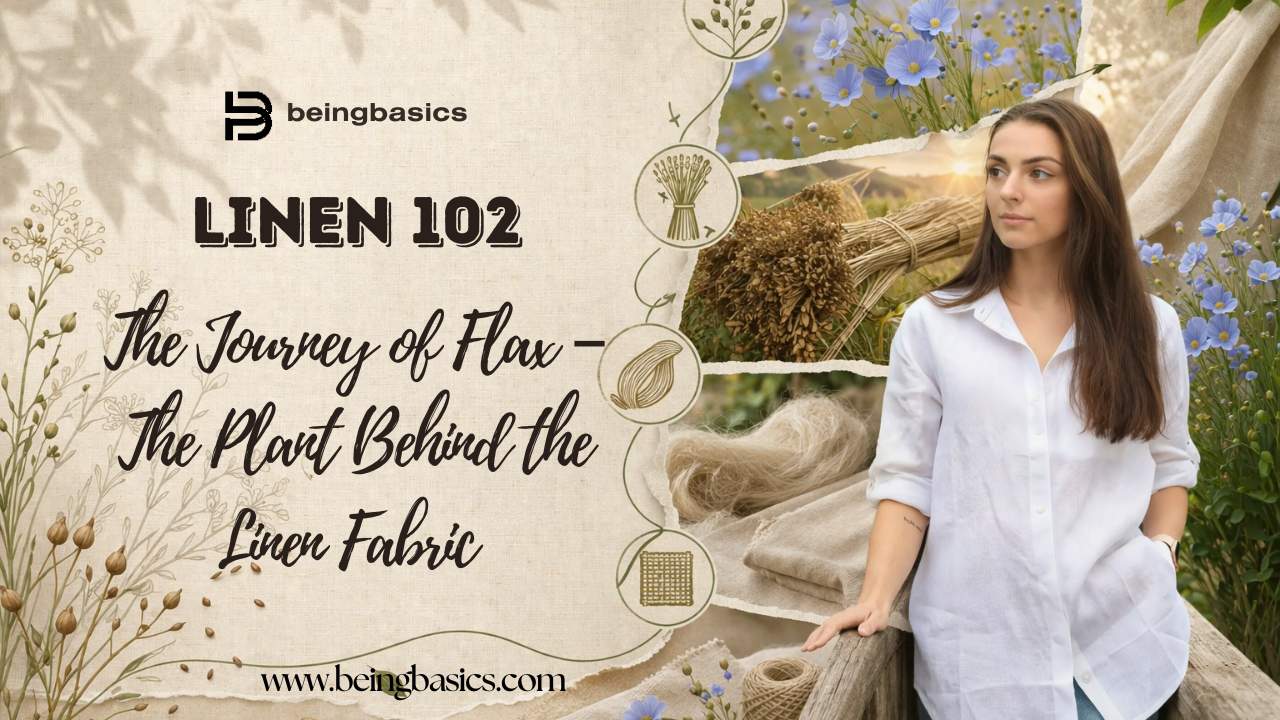
Linen 102: The Journey of Flax – The Plant Behind the Linen Fabric
Curiosity about fabrics often begins with comfort and style. Sustainable fashion conversations also lead many shoppers to ask deeper questions about materials. Linen stands out as one of the most trusted natural fabrics, yet the real story starts long before the fabric reaches the store.
Fashion lovers across Norway increasingly choose Scandinavian linen clothing, breathable linen outfits, and relaxed silhouettes that support comfort throughout changing seasons. Understanding the plant behind linen allows shoppers to appreciate why this fabric has remained relevant for centuries.
This guide explores the complete linen production journey, from the flax plant growing in European soil to the finished garments people wear today. Each stage reveals why eco-friendly linen clothing continues to shape the future of responsible fashion.
Meet the flax plant. The Root of Eco-Friendly Linen Clothing
The story of linen begins with flax, a delicate, blue-flowered plant that grows tall and slender in temperate European climates. Fields across France, Belgium, and the Netherlands produce some of the finest flax fibres used in modern textiles. Favourable rainfall and soil conditions allow flax to grow naturally without heavy agricultural intervention.
Flax stands apart from many other textile crops because it requires minimal irrigation and fewer chemical treatments. Natural rainfall often supports the entire growth cycle. This agricultural efficiency makes flax a cornerstone material behind eco-friendly linen clothing.
Sustainability conversations often focus on fabrics that reduce environmental stress. Flax naturally fits that goal. Soil health remains stable during cultivation, and the crop grows quickly within seasonal cycles.
Fashion brands across Europe now celebrate flax as a key part of Nordic linen fashion. Natural fibres, relaxed silhouettes, and breathable fabrics work perfectly with Scandinavian design values. Consumers searching for premium quality linen clothing appreciate both the comfort and the environmental responsibility that flax provides.

From Field to Fabric: The Flax-to-Linen Production Journey
A flax plant growing in a field may look simple, yet the transformation into linen fabric involves several fascinating stages. Each step in the flax fibre process protects the integrity of the fibres and prepares them for weaving.
This process connects agriculture, craftsmanship, and textile expertise. European flax farmers and textile specialists work together to ensure that fibres maintain their strength and softness throughout the linen production journey.
Sowing and Growing Flax
Flax cultivation begins when seeds are sown densely across prepared soil. Close spacing encourages the plants to grow tall rather than bushy. Tall stems produce long fibres that create smoother linen yarn.
Natural rainfall often supports flax growth, which means irrigation demands remain low. Farmers rely on seasonal climate patterns rather than heavy water use. Sustainable farming practices allow flax to thrive without intensive chemical inputs.
Fields across the European flax belt provide ideal conditions for this crop. When the plants reach maturity, slender stems hold the fibres that will eventually become eco-friendly linen clothing.
Harvesting the Flax Plants
Flax harvesting follows a unique method. Farmers pull the plants from the ground instead of cutting them. Pulling preserves the full length of the fibres within the stem.
Preserved fibre length improves the strength and softness of linen yarn. This stage directly affects the final quality of garments such as the best linen trousers in Norway and relaxed shirts.
Harvested plants are gathered into bundles and prepared for the next stage of the flax to linen process.
Rippling and Retting
Rippling removes seeds from the plant stems. Flax seeds often serve additional uses beyond textiles.
Examples include
- food ingredients
- linseed oil used in various products
Retting follows rippling and remains one of the most important stages of the flax fibre process. Moisture and natural microorganisms slowly loosen the fibres from the woody stem. Nature essentially separates the valuable textile fibres from the plant structure.
Careful retting ensures fibres remain flexible and strong. Proper timing helps create linen that feels soft yet durable.
Breaking Scutching and Hackling
Dried stems then pass through several mechanical processes.
Breaking crushes the woody core inside the stalk. Scutching removes leftover woody fragments. Hackling combs the fibres so they align into smooth strands ready for spinning.
These steps refine the fibres before they become yarn.
Aligned fibres create smoother threads that eventually produce breathable linen outfits and elegant fabrics used in Norwegian linen clothing.
Spinning and Weaving Linen Fabric
Spinning twists flax fibres into yarn. Skilled textile specialists carefully maintain fibre strength during this process.
Weaving transforms yarn into linen fabric. Textile mills produce fabrics used for a wide range of garments.
Common linen garments include
- relaxed shirts
- lightweight trousers
- everyday Scandinavian summer wear
Finished fabrics eventually reach brands and designers who create modern, eco-friendly linen clothing for customers across Norway and beyond.
A Zero-Waste Plant: How Every Part of Flax Gets Used
Flax stands out as one of the most efficient crops in textile agriculture. Almost every part of the plant serves a useful purpose. Textile fibres form the core product, yet several other components contribute to different industries.
Long flax fibres become linen yarn and fabric used for clothing and home textiles. Those fibres eventually appear in garments such as linen shirts men’s Norway, relaxed dresses, and linen pants Norway.
Seeds removed during rippling also hold significant value. Food producers use flax seeds in nutritional products, while manufacturers produce linseed oil for industrial applications.
Brands promoting eco-friendly linen clothing often highlight this agricultural efficiency. Consumers interested in affordable linen clothing Norway appreciate materials that align with responsible production.
Flax demonstrates how traditional crops can support modern sustainability goals. Each part of the plant contributes to useful products, which strengthens the reputation of linen as a responsible textile choice.
What This Means for Conscious Fashion Buyers
Modern shoppers ask thoughtful questions about clothing materials. Curiosity often begins with style and comfort yet quickly expands into sustainability and transparency.
Many consumers exploring linen online shopping Norway want to understand whether linen truly supports environmental responsibility. The answer often depends on how the flax is grown and processed. European flax farming remains one of the most responsible agricultural systems for textile fibres.
Recognising authentic linen products also helps buyers make informed decisions. Natural linen usually has a slightly textured feel and relaxed drape. Garments such as best linen trousers in Norway or classic shirts often display that signature look.
Knowledge about the flax to linen journey empowers buyers to choose eco-friendly linen clothing that supports both comfort and sustainability.
Conclusion
Flax fields may look simple at first glance, yet each plant holds the beginning of a remarkable textile story. Careful cultivation, natural retting, and skilled craftsmanship transform those stems into fabrics loved across the world.
Understanding the linen production journey reveals why eco-friendly linen clothing continues to gain popularity among conscious fashion communities. Natural fibres, efficient farming, and biodegradable materials combine to create garments that respect both comfort and the environment.
BeingBasics celebrates that transparency by focusing on thoughtfully crafted linen garments designed for everyday comfort.
Find your next favourite linen shirt or relaxed trousers at BeingBasics and enjoy eco-friendly linen clothing created for modern Norwegian lifestyles.
FAQs – The Journey of Flax
What is flax and how does it become linen fabric
Flax is a natural plant whose fibres come from the stem. Textile specialists extract those fibres through the flax fibre process, spin them into yarn, and weave them into linen fabric used in clothing.
Why is eco friendly linen clothing considered sustainable
Flax requires minimal irrigation and fewer chemical treatments compared with many textile crops. Natural biodegradability also makes eco-friendly linen clothing a responsible material choice.
Where does most linen come from
European regions such as France, Belgium, and the Netherlands produce much of the world’s high quality flax used for linen fabrics.
Why do people prefer linen clothing in Nordic climates
Breathable fibres allow air circulation and help regulate body temperature. Those qualities make breathable linen outfits ideal for changing Nordic weather.
How can shoppers find authentic linen clothing in Norway
Look for natural fibre labels and trusted brands offering Norwegian linen clothing through reliable linen online shopping Norway platforms.